
Interceptor pumping for Bend restaurants, kitchens, and food carts, with your service record filed to the City. Most companies hand you a receipt. We handle the reporting.
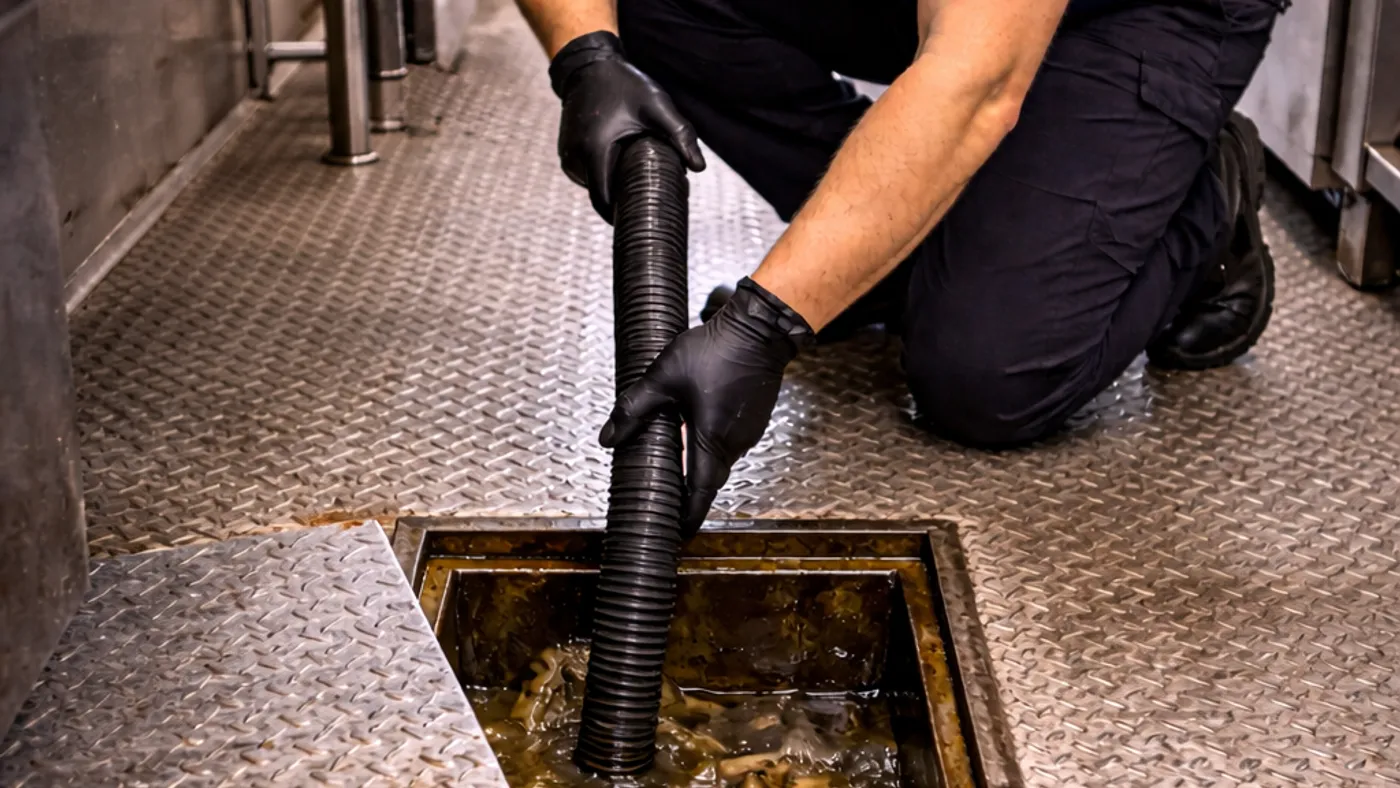
The part nobody else does
The City of Bend runs a Fats, Oils and Grease (FOG) program through its Water Services department. If you operate a commercial kitchen with a grease interceptor, the City sets a cleaning schedule for your device and requires you to keep maintenance records and submit them through its online compliance system, SwiftComply.
That’s the part that gets missed. The pumping gets done and the record doesn’t get filed, and then the City asks for twelve months of maintenance history that nobody kept.
We pump the trap and file the record. When the City looks, your history is already there.
What we service
- Under-sink grease traps
- In-ground grease interceptors
- Large exterior interceptors
- Food cart and pod interceptors, including shared pod devices
- Cleanup of the enclosure pad and surrounding area
What the service includes
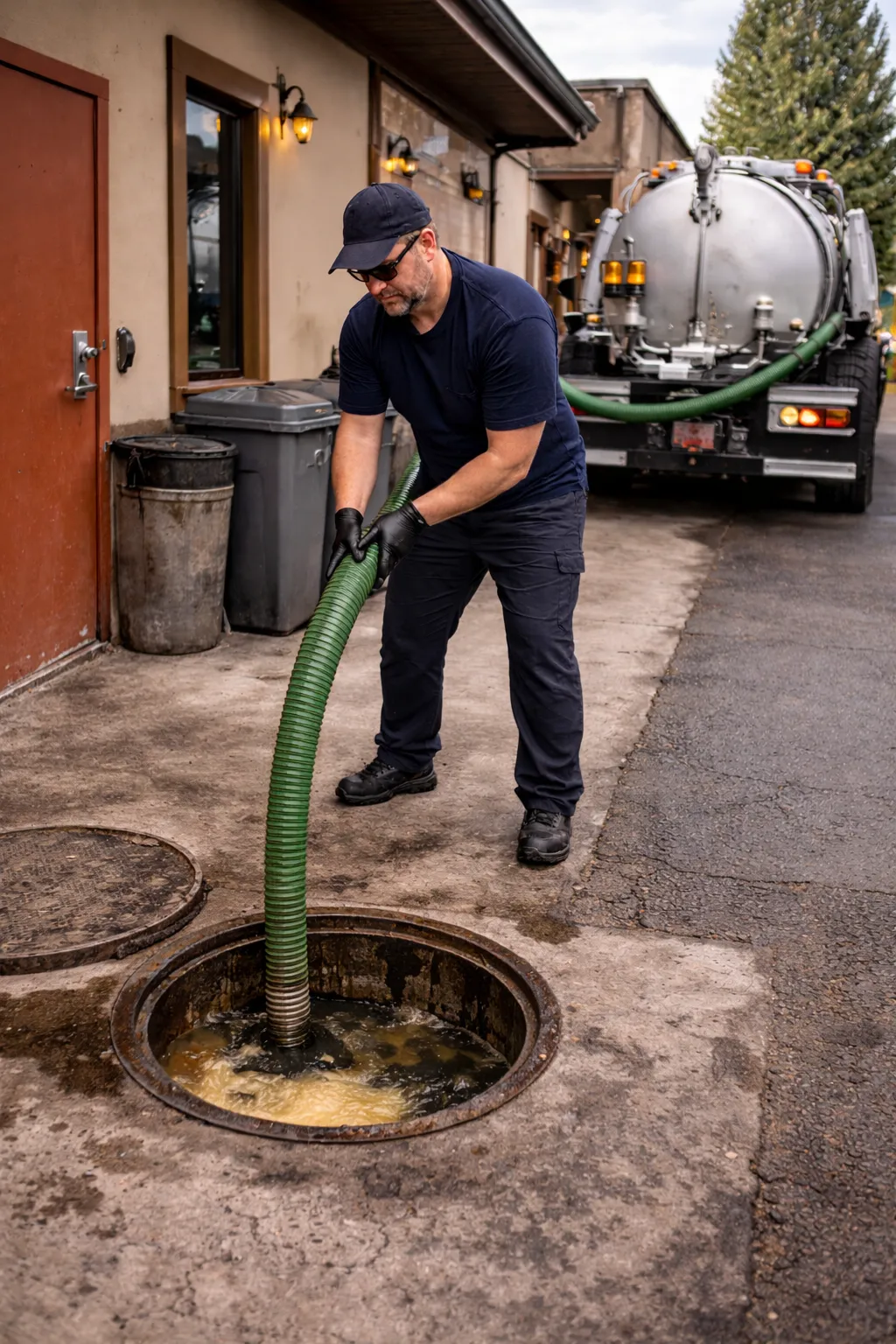
- Full pump-out. Complete removal of accumulated FOG, solids, and water. Not a skim off the top. A partial pump resets the clock without resetting the problem, and it’s the most common corner cut in this trade.
- Interior inspection. Baffles, tees, and inlet and outlet checked. We flag damage, because a broken baffle means the trap isn’t actually trapping regardless of how often it’s pumped.
- Cleaning of interior walls and components.
- Proper disposal of collected FOG at an approved facility.
- Area cleanup. Pad and surrounding surfaces cleaned. This is where the smell complaints come from.
- Service documentation. Written record of date, volume, and condition.
- City reporting. Record filed to the City compliance system.
How often
The City sets a required frequency for your device. Beyond that, it comes down to interceptor size against your cooking volume. A small under-sink trap in a busy kitchen may need monthly service, while a large exterior interceptor at a moderate-volume restaurant may run quarterly.
The signs you’re overdue:
- Slow drains anywhere in the kitchen
- Odor near drains or around the interceptor
- Backup at the lowest floor drain
- Visible grease at the outlet side
- Grease surfacing on the pad around the lid
Most operators wait for one of these. By then you’re often looking at a backup during service, which costs a lot more than the pumping would have.
Why it matters beyond the fine
A blocked lateral doesn’t announce itself politely. It backs up into the kitchen during service, and you close. A sanitary sewer overflow traced back to your building is a much bigger conversation with the City than a missed pumping record.
Recurring schedule
We put clients on a schedule matched to their required frequency and just show up. No calendar to manage, no reminder to miss, and the record files every time.
Do both at once
If you’re already booking a restaurant deep clean, do the trap in the same closure window. One shutdown instead of two.
FAQ
How often does the City require pumping?
The City sets a frequency for your specific device based on its size and your operation. If you don’t know yours, we can help you find out on the walkthrough.
What size traps do you handle?
Under-sink traps through large exterior interceptors, and shared pod devices.
What happens to the waste?
Transported and disposed of at an approved facility. Documentation available on request.
Can you clean the enclosure too?
Yes. The pad and enclosure are usually the worst-smelling part of the property. See our pressure washing before and after.
We already have a pumping company.
Ask them whether they file your records with the City or hand you a receipt. If it’s the receipt, that gap is yours to cover.
Related
Restaurant deep cleaning · Food truck cleaning · Pressure washing · FAQ
Book a walkthrough
Half an hour at your building gets you a room-by-room written scope and a flat price. No cost, no obligation.
Book a WalkthroughCall 541-604-7272
Serving Bend, Redmond, Sunriver, Prineville, Sisters, La Pine, Terrebonne and Tumalo.