
Hot water extraction for offices, lobbies, clinics, and classrooms. Removes what a vacuum can’t reach and buys you years before replacement.
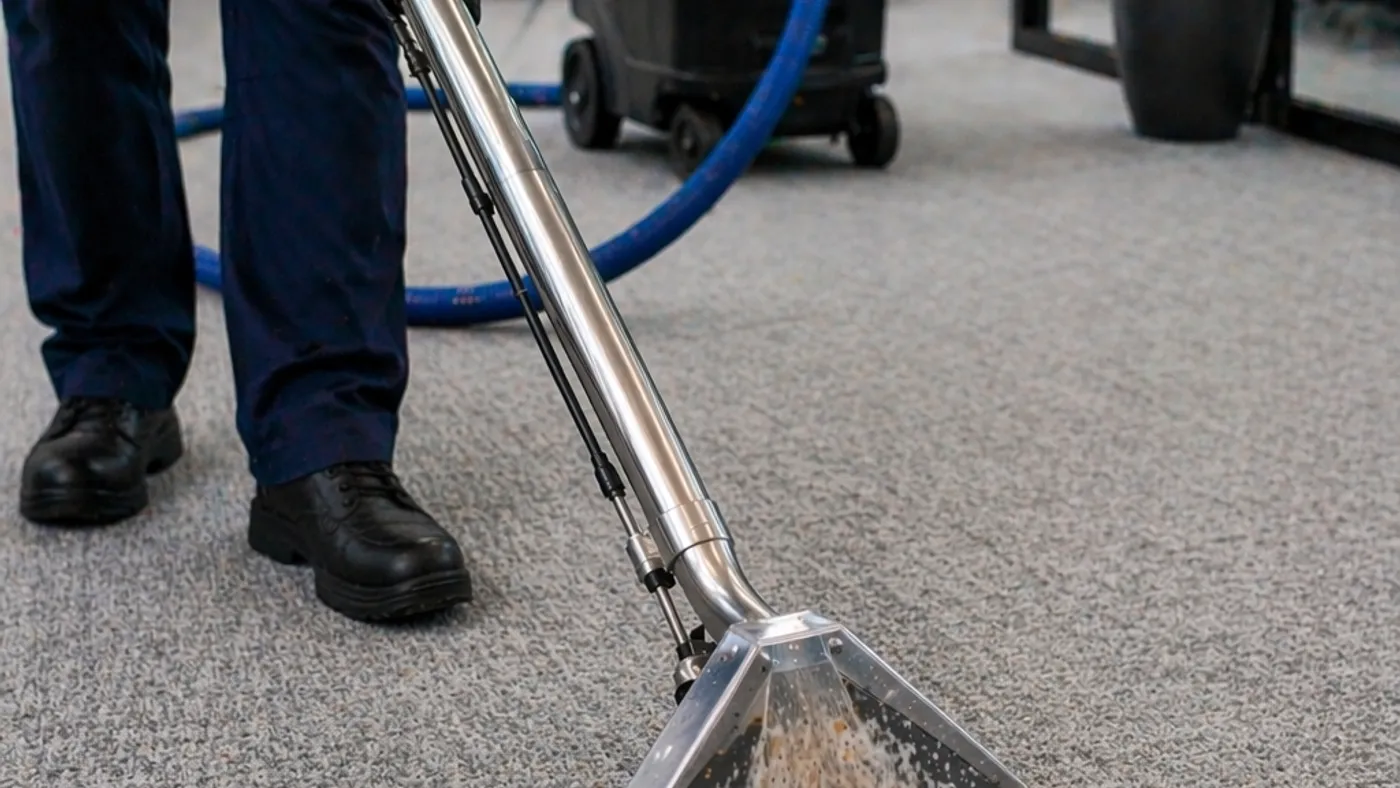
The case for doing it on a schedule
Carpet doesn’t wear out from foot traffic. It wears out from the grit that foot traffic grinds into it.
Every step drives soil particles down into the pile where a vacuum can’t reach. Those particles are abrasive, and they cut the fibers from below. The carpet goes flat and grey in the traffic lanes, and by the time it looks bad enough to notice, the damage is mechanical and permanent.
Extraction on a schedule pulls that soil out before it does the cutting. It’s the difference between replacing commercial carpet at seven years and at fifteen.
What we do
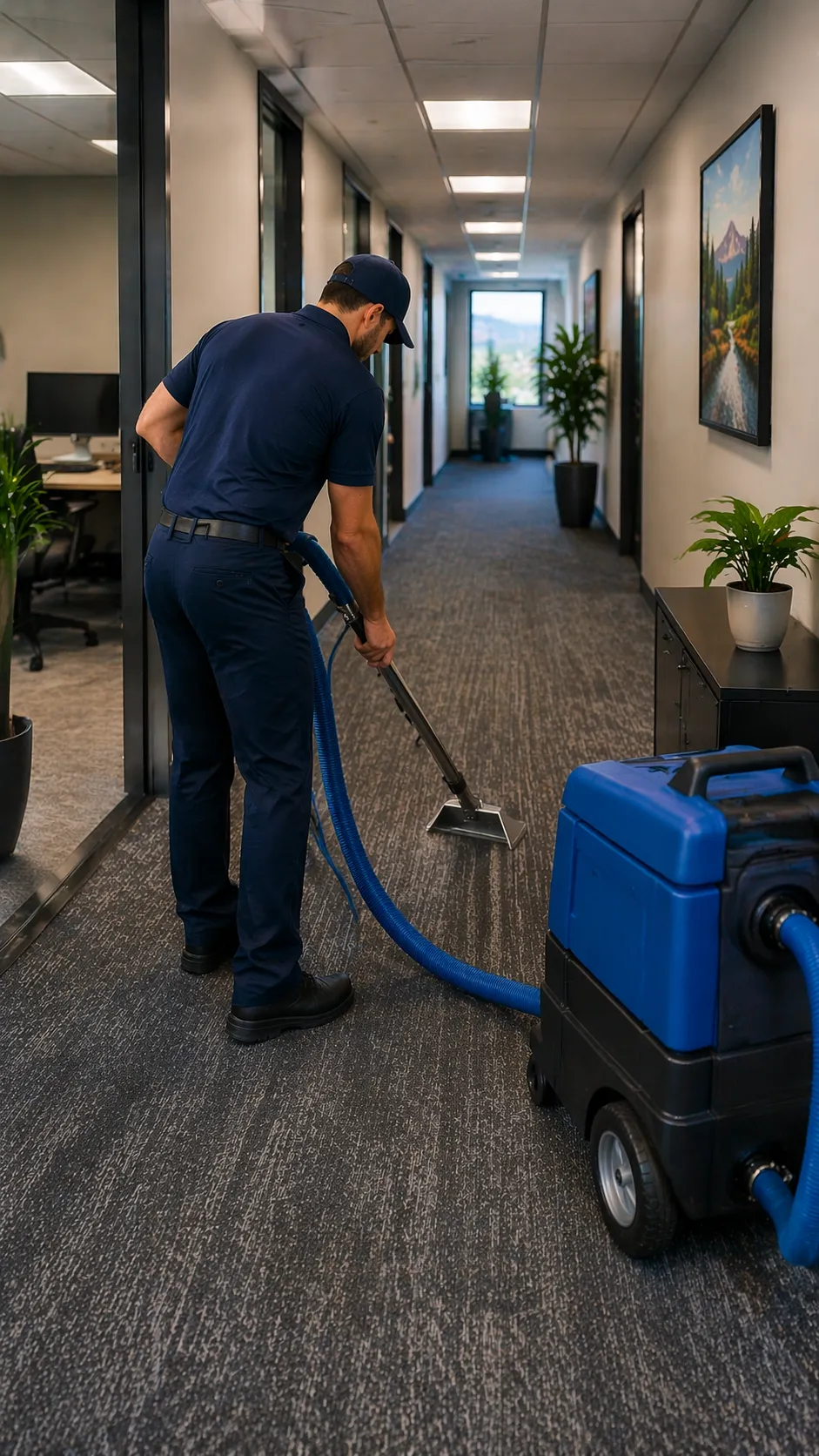
Pre-inspection: walk the space, identify fiber type, note traffic lanes, mark spots and stains and what caused them. Pre-vacuum: commercial vacuum pass to lift dry soil first. Skipping this turns dry soil into mud. Pre-spray and agitation: cleaning solution applied and worked into the pile so it reaches the base of the fiber. Spot treatment: problem areas treated individually before the main pass. Coffee, ink, grease, and organic stains each get different treatment. Hot water extraction: hot solution injected under pressure and immediately vacuumed back out with the suspended soil. Traffic lane detail: extra passes where the wear actually is. Grooming and dry time: pile groomed and airflow set up. Most commercial carpet is walkable in a few hours and fully dry overnight.
Adjacent hard floors get mopped on the same visit so you don’t get a clean-carpet, dirty-tile line at the transition.
How often
| Space | Typical extraction cycle |
|---|---|
| Executive and low-traffic offices | Annually |
| General office space | Every 6 to 12 months |
| Lobbies, corridors, entries | Every 3 to 6 months |
| Clinics and waiting rooms | Every 3 to 6 months |
| Classrooms and childcare | Every 3 to 4 months, plus school breaks |
| Restaurant dining rooms | Quarterly or more |
Interim spot cleaning between extractions extends every one of these.
The Central Oregon part
Bend’s soil is volcanic: pumice and fine ash. It’s lighter and sharper than the clay-based dirt most carpet manufacturers design their maintenance guidance around, and it stays airborne longer, which means it settles back onto carpet you just cleaned.
Add the crushed basalt and cinders spread on Bend roads through winter, which get tracked in from every parking lot from November through the spring sweep, and Central Oregon buildings genuinely need a shorter extraction cycle than the same building would in Portland. Entry matting is the cheapest thing you can do about it.
FAQ
How long until we can walk on it?
A few hours for foot traffic, overnight to fully dry. We schedule Friday evenings or after close for spaces that can’t lose a day.
Will old stains come out?
Some. Fresh spills usually come out completely. Old organic stains, dye stains, and anything already treated with an over-the-counter product may be permanent. We’ll tell you what we expect before we start rather than after.
Is extraction bad for commercial carpet?
Done properly, no. Carpet manufacturers specify it. What damages carpet is over-wetting, leaving detergent residue behind, and letting abrasive soil sit in the pile for years.
Do you clean cubicle panels and upholstery?
Yes, on request. Panels collect more than people think.
Can you do it during business hours?
We’d rather not. Extraction hoses run through the space and floors are damp afterward. Evenings and weekends are better for everyone.
Related
Hard floor care · Janitorial services · Home carpet cleaning · Our work
Book a walkthrough
Half an hour at your building gets you a room-by-room written scope and a flat price. No cost, no obligation.
Book a WalkthroughCall 541-604-7272
Serving Bend, Redmond, Sunriver, Prineville, Sisters, La Pine, Terrebonne and Tumalo.